





JOURNAL
THE SUBTLE LAYER OF A SPACE:
COLOUR, FABRIC, TEXTURE
People share the same space in an office, a lobby, a waiting area. The light comes in from the same place every day, the seating is the same for everyone. Still, everyone leaves with something different. One person feels at ease, another is tired without knowing why. One stays in a corner for a long time, another walks straight past that same corner.
People share the same space in an office, a lobby, a waiting area. The light comes in from the same place every day, the seating is the same for everyone. Still, everyone leaves with something different. One person feels at ease, another is tired without knowing why. One stays in a corner for a long time, another walks straight past that same corner.
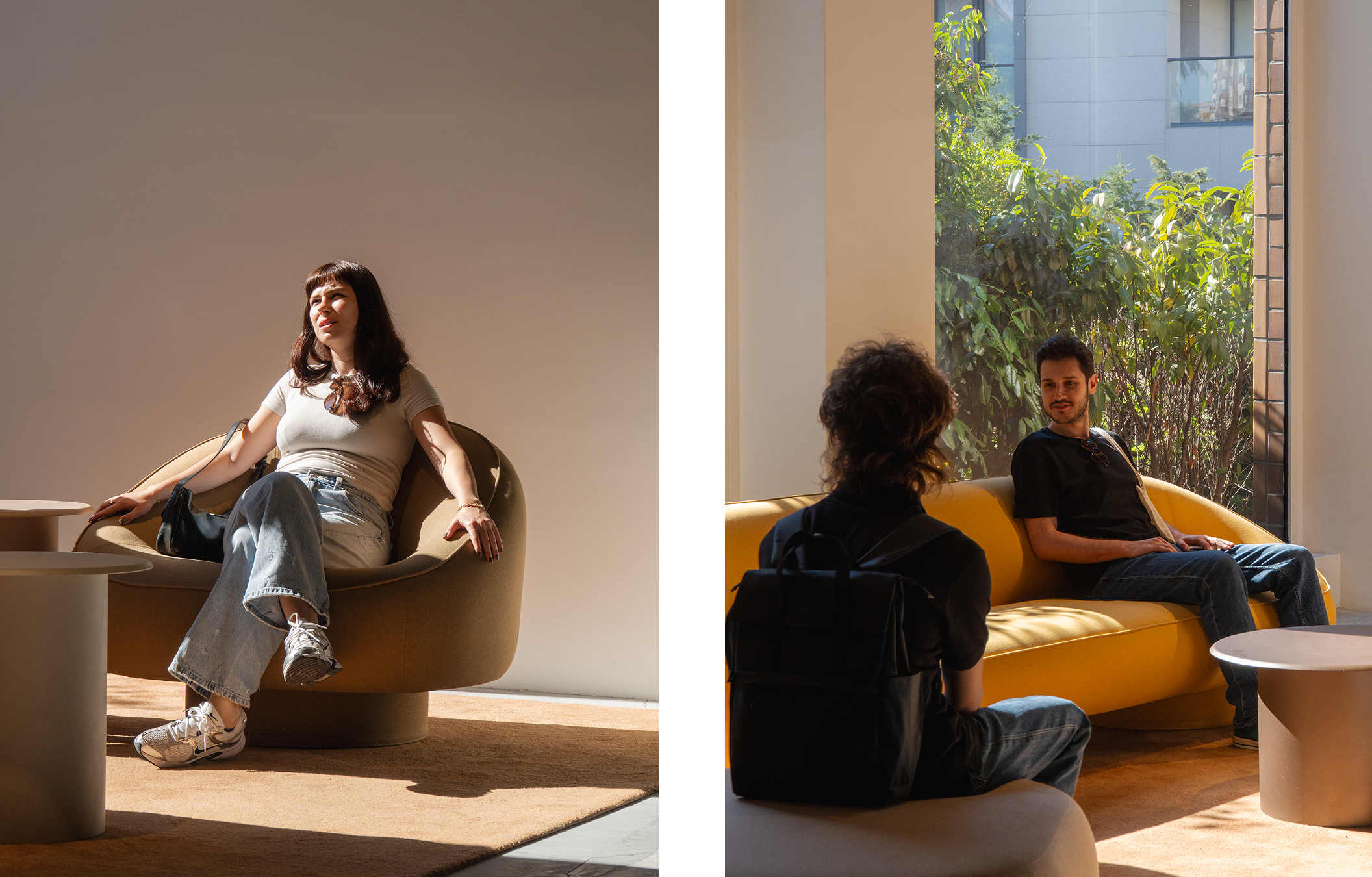
Ceiling height, where the light comes from, where you turn when you walk through the door. These are the structural decisions of a space. What makes a space feel like ours sits somewhere subtler: in the surface your hand touches, in the colour your eye settles on, in the texture you find underneath you when you sit down. When we remember a space, we usually remember that layer rather than those decisions.
Ceiling height, where the light comes from, where you turn when you walk through the door. These are the structural decisions of a space. What makes a space feel like ours sits somewhere subtler: in the surface your hand touches, in the colour your eye settles on, in the texture you find underneath you when you sit down. When we remember a space, we usually remember that layer rather than those decisions.
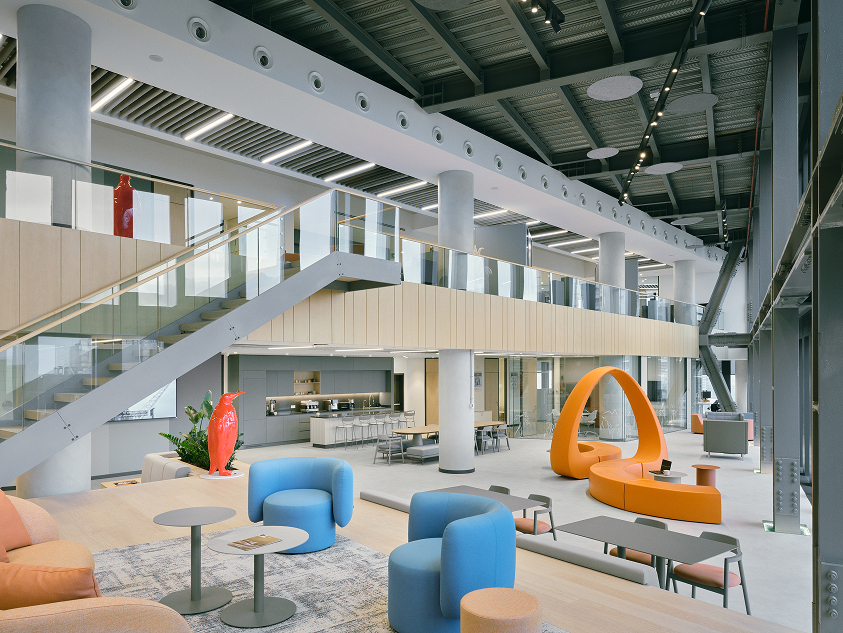
The same piece travels to dozens of different spaces. Ora Lounge, for instance, carries the same form in every project and is read differently in each one. In a thick, textured fabric it reads larger and heavier; in a tightly woven, flat surface it looks lighter. The fabric we choose for a lobby is not the fabric we choose for a working floor; each space asks for a different feeling.
What changes is not the piece itself but its relationship with the space. When a piece belongs where it is, the eye doesn't stop on it; when it doesn't, the eye goes there first. The same piece recedes in one space and comes forward in another.
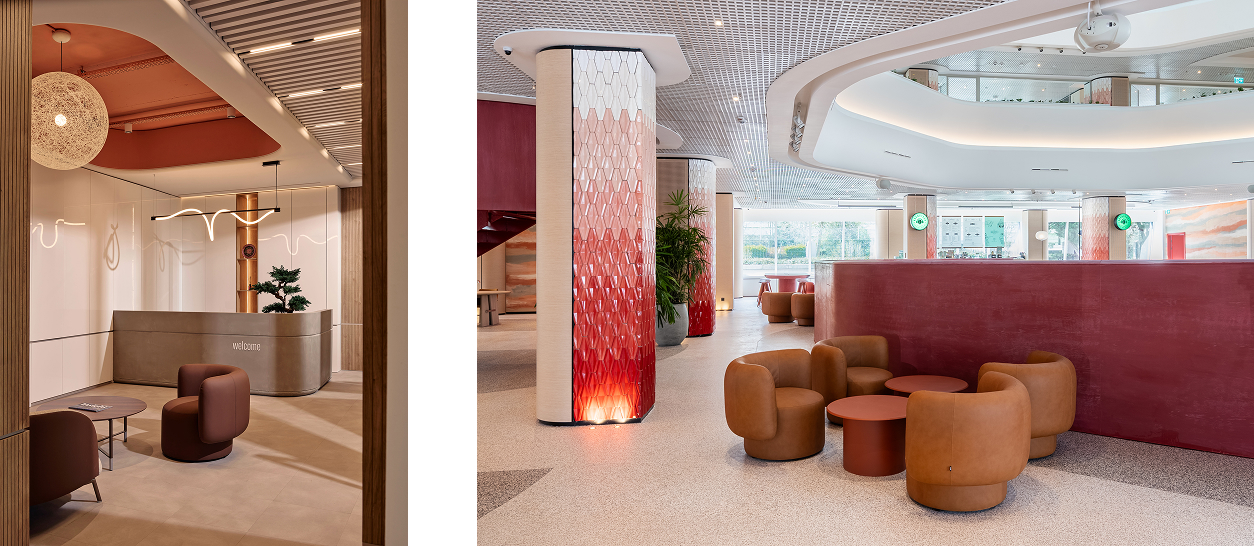
Our colour and material world is shaped by our Stylist Aslı Gürşen. The selection is always being renewed, and the same piece starts again with each new selection. A fabric we chose a few years ago says something else today. This is why we look at furniture the way a fashion brand does. Colours and materials change; the way of looking that holds the selection together stays the same.
Our colour and material world is shaped by our stylist Aslı Gürşen. The selection is always being renewed, and the same piece starts again with each new selection. A fabric we chose a few years ago says something else today. This is why we look at furniture the way a fashion brand does. Colours and materials change; the way of looking that holds the selection together stays the same.
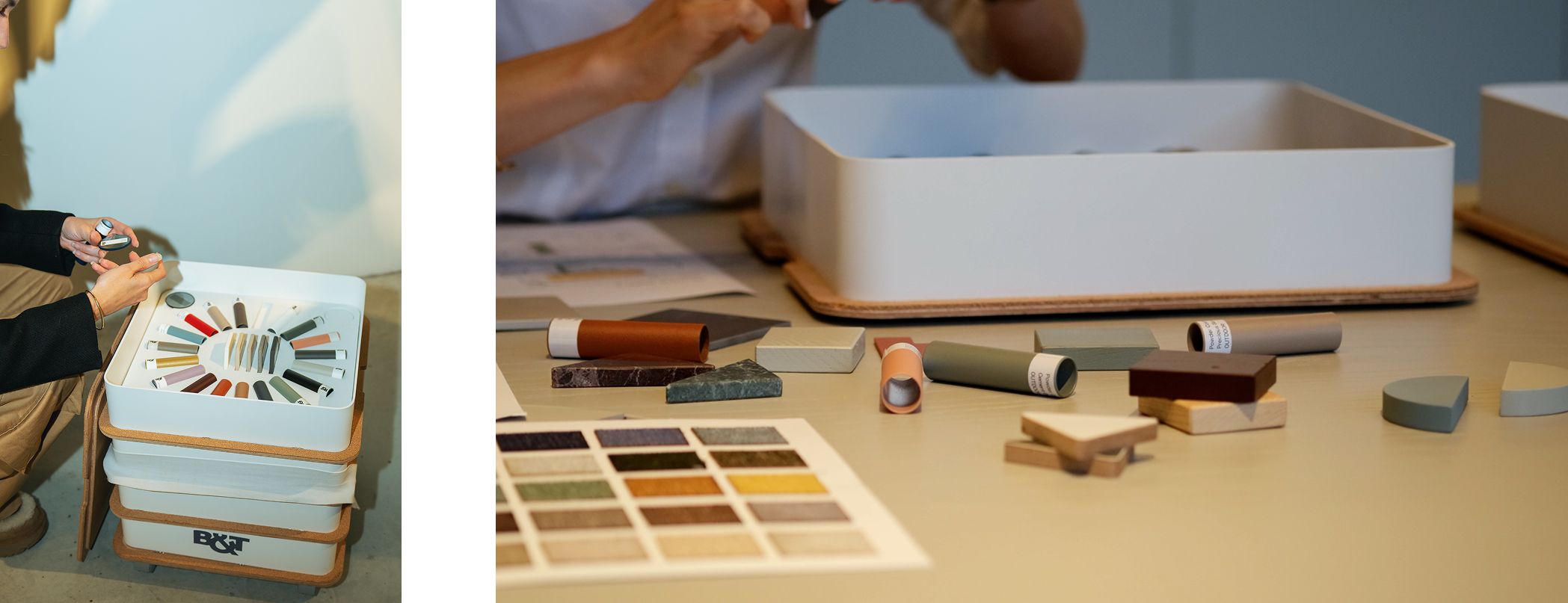
What a fabric does on a form is something we have been talking about among ourselves for a long time. When we came together at B&T House with Gitte Nyhus Holm, Regional Director at Kvadrat Middle East, and guests from our partner Jeyan Ülkü Architects, we followed the same questions.
What a fabric does on a form is something we have been talking about among ourselves for a long time. When we came together at B&T House with Gitte Nyhus Holm, Regional Director at Kvadrat Middle East, and guests from our partner Jeyan Ülkü Architects, we followed the same questions.
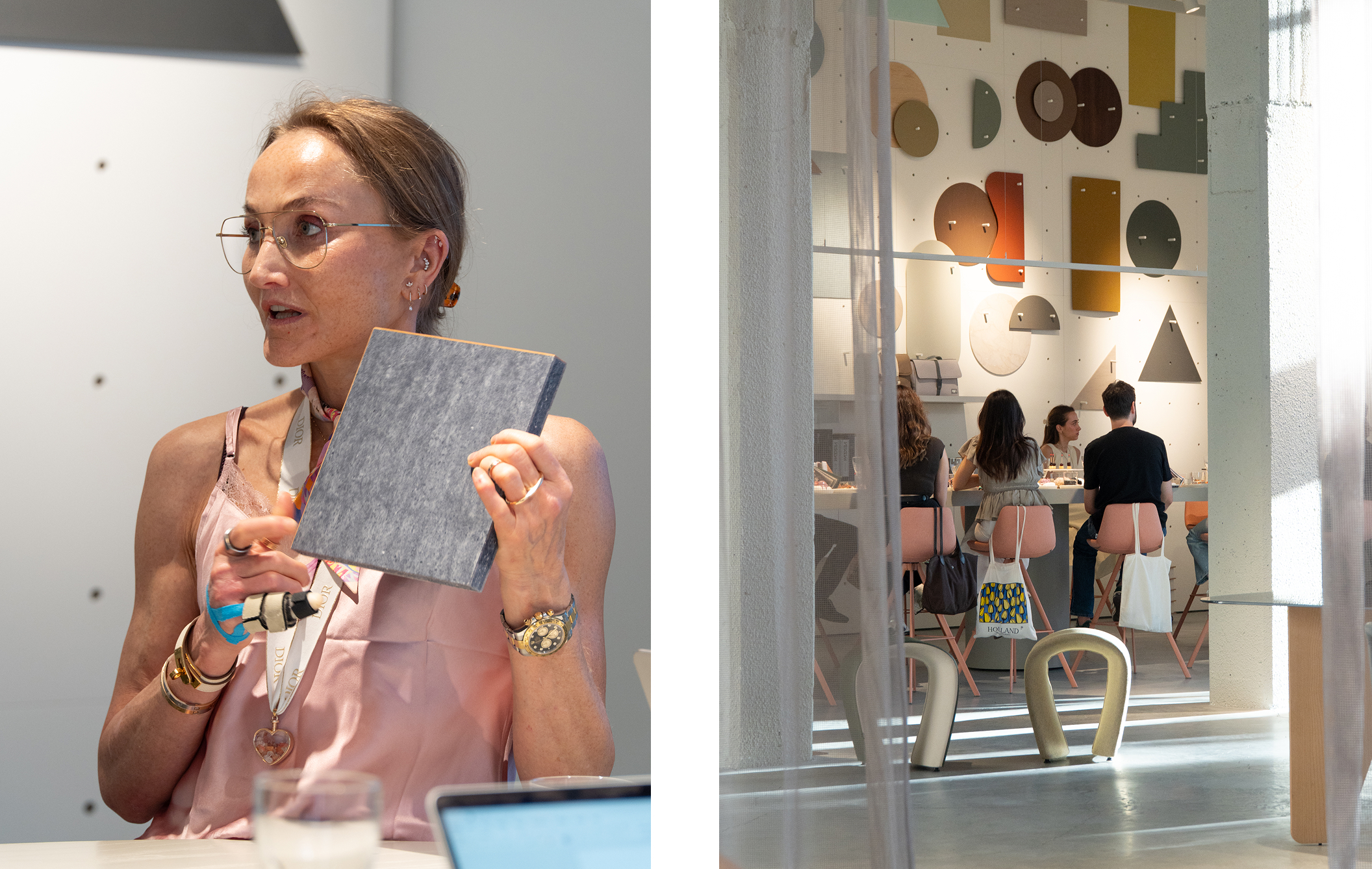
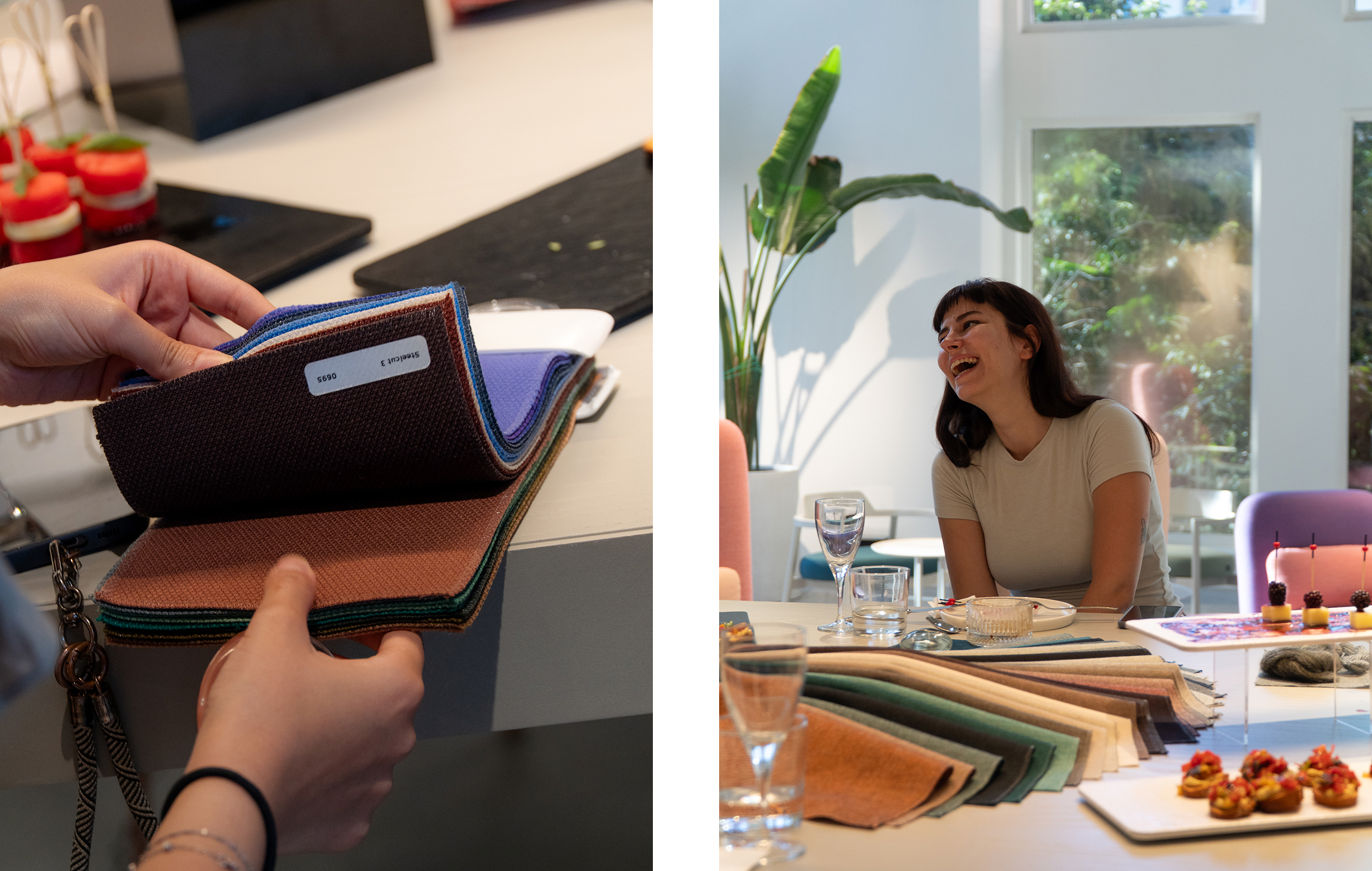
Counting how many colours there are in a space, for instance. Where one person sees a single colour, another sees four. Telling which material lifts a space and which one quietly pulls it down. What is missing here, what would need to change for the energy to open up. A colour changes with the one beside it; it won't hold still long enough to be counted.
We looked at the same project together and everyone saw something different. We didn't all end up in the same place, and we didn't need to.
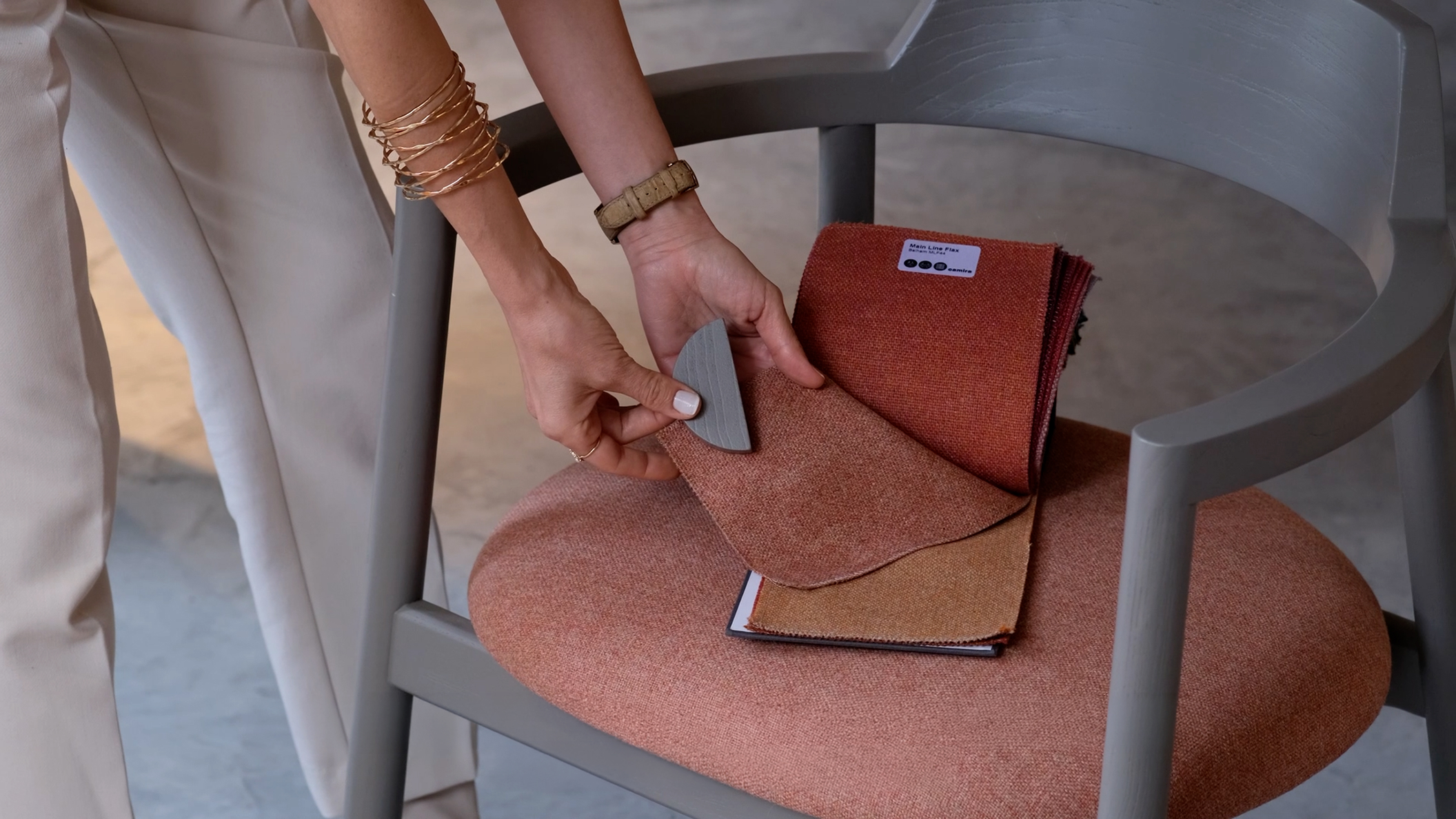
At some point the conversation left the table and moved closer to the pieces in B&T House. A surface that reads as a single colour from across the room opens into several as you come near it, and the threads separate. The same fabric becomes another fabric depending on where you stand.
Counting how many colours there are in a space, for instance. Where one person sees a single colour, another sees four. Telling which material lifts a space and which one quietly pulls it down. What is missing here, what would need to change for the energy to open up. A colour changes with the one beside it; it won't hold still long enough to be counted.
We looked at the same project together and everyone saw something different. We didn't all end up in the same place, and we didn't need to.
At some point the conversation left the table and moved closer to the pieces in B&T House. A surface that reads as a single colour from across the room opens into several as you come near it, and the threads separate. The same fabric becomes another fabric depending on where you stand.
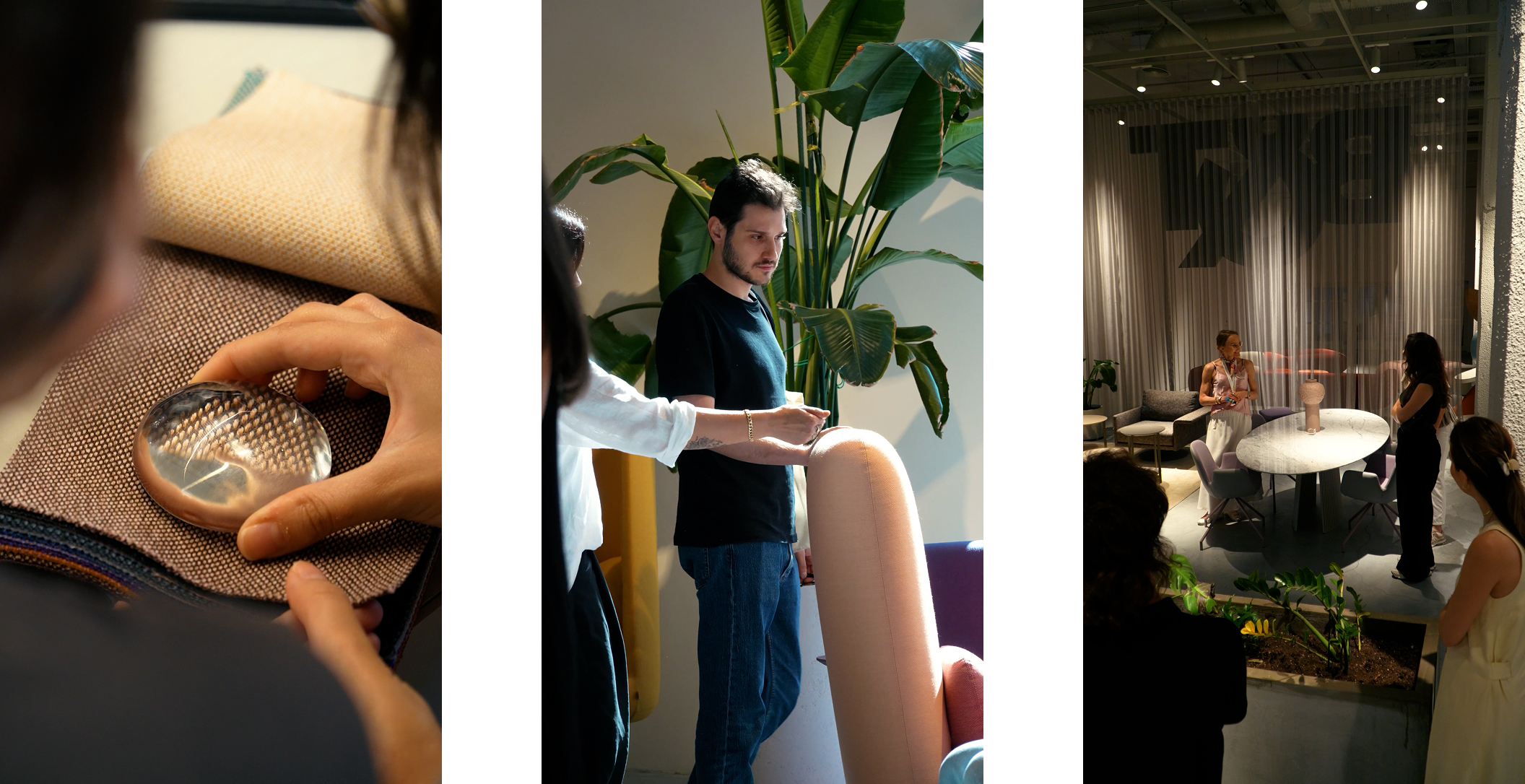
We have been asking the same question for years: how do people spend time together? Colour, fabric and texture come back into that question every time.